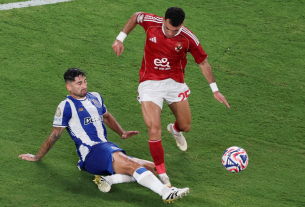
The landscape of international club football has entered a revolutionary chapter. The introduction of the revamped, quadrennial FIFA Club World Cup has transformed the competition into a truly global spectacle, bringing together 32 of the world’s best clubs in a tournament designed to determine the ultimate champions of world football.
Replacing the previous annual format with a larger and more ambitious structure, the new tournament creates a global stage where champions and elite representatives from all six football confederations, AFC, CAF, CONCACAF, CONMEBOL, OFC, and UEFA, compete for international supremacy.
Hosted in the United States, this expanded competition represents more than just another trophy. It is a test of tactical intelligence, squad management, adaptability, and financial ambition. For clubs, players, analysts, and football audiences worldwide, understanding the dynamics of this new era is essential.
A New Era: The 32-Team Format and Group Stage Battle
The move to a 32-team tournament format brings the FIFA Club World Cup closer to the structure of the traditional FIFA World Cup, creating a demanding journey where every match carries significant consequences.
Eight Groups, One Global Mission
The 32 qualified teams are divided into eight groups of four, with each club playing three group-stage matches in a round-robin format.
In this environment, there is little room for error. Every point earned, every goal scored, and every defensive mistake can determine whether a team advances or exits the competition.
The Road to Glory
The top two teams from each group progress to the knockout stages, where the tournament shifts into a high-pressure elimination battle.
The knockout phase features:
- Round of 16
- Quarter-finals
- Semi-finals
- Final
Unlike previous editions where continental champions often entered at advanced stages, every team must now navigate the same demanding route from the opening fixture to the final whistle.
A Clash of Football Cultures: The Global Battle for Supremacy
One of the most exciting elements of the expanded Club World Cup is the increased number of encounters between clubs from different football regions.
For years, European clubs have dominated global club competitions, but this new format creates more opportunities for teams from Africa, South America, Asia, and North America to challenge the established hierarchy.
Tactical Diversity on the World Stage
The tournament provides fascinating tactical battles between different football philosophies.
European giants such as Real Madrid, Manchester City, and Bayern Munich bring technical quality, possession-based systems, and elite squad depth.
Meanwhile, South American powerhouses such as Palmeiras, Flamengo, and River Plate offer intensity, creativity, and tactical aggression.
African and Asian representatives, including Al Ahly, Mamelodi Sundowns, and Al Hilal, bring disciplined defensive structures, physical strength, and rapid counter-attacking threats.
The Rise of the Underdog
The expanded tournament creates opportunities for unexpected results. Clubs outside Europe’s traditional elite can challenge bigger opponents through:
- Compact defensive organisation
- Fast transitions
- Set-piece efficiency
- High-energy pressing
- Tactical discipline
The ability to adapt quickly could prove just as valuable as individual talent.
Squad Depth: The Ultimate Test of Champions
Winning the FIFA Club World Cup will require more than a world-class starting XI. The tournament presents a unique physical challenge, with clubs potentially playing up to seven matches in a short period while already carrying the burden of demanding domestic and continental campaigns.
Managing Fatigue and Rotation
Coaches must carefully balance:
- Player workload
- Injury prevention
- Tactical rotation
- Recovery strategies
- Squad harmony
Teams with deeper squads and flexible tactical options are likely to have a major advantage as the tournament progresses.
Transfer Market Preparation
The competition has also influenced club planning strategies. Many teams are expected to strengthen their squads before the tournament, targeting players who can provide:
- Additional attacking options
- Defensive stability
- Midfield control
- Experience in high-pressure matches
The ability to build a balanced squad could determine who lifts the trophy and who falls short.
A Commercial and Competitive Revolution
The expanded FIFA Club World Cup represents a major shift in how global club football is organised. It creates a platform where clubs from every continent can compete regularly on the biggest stage, offering new commercial opportunities and increasing worldwide exposure.
Beyond financial rewards, the tournament provides something football has long debated: a clearer pathway to determining the strongest club side on the planet.
Conclusion: The Beginning of a New Football Era
The new FIFA Club World Cup is more than an expanded tournament; it is a statement about the future direction of global football.
By bringing together the world’s leading clubs in a single competition, it creates a true international championship where tactical innovation, squad strength, and mental resilience will decide the ultimate winners.
The global football map is changing, and the expanded Club World Cup stands at the centre of this new era, where every continent has a chance to compete, challenge, and make history.