The 2026 FIFA World Cup across the United States, Mexico, and Canada will be remembered as a defining moment in the history of international football. The first tournament to feature 48 nations and a record-breaking 104 matches, North America 2026 delivered a new era of global competition, tactical innovation, and unforgettable football stories.
From emerging football nations announcing their arrival on the biggest stage to elite teams refining new tactical philosophies, the tournament provided a fascinating glimpse into the future direction of the game.
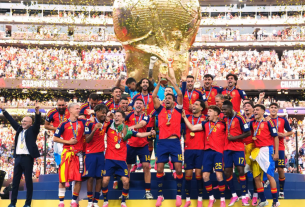
Ultimately, it was Spain who conquered the world, lifting the iconic trophy at MetLife Stadium after a dramatic 1–0 extra-time victory over Argentina. Beyond the final result, the tournament revealed important lessons about squad building, tactical discipline, and the evolving identity of modern international football.
The 48-Team Experiment: A New Era of Global Competition
Before the tournament began, the expansion from 32 to 48 teams sparked intense debate among supporters, analysts, and former players. Many questioned whether the increased number of participants would reduce quality or create an imbalance between football’s traditional giants and emerging nations.
However, once the action started, the expanded format delivered a compelling spectacle.
More Nations, More Stories, More Competitive Drama
The introduction of 12 groups of four teams maintained pressure throughout the group stage, with teams fighting until the final whistle for qualification. The addition of a Round of 32 knockout stage ensured that more nations remained involved in meaningful competition deep into the tournament.
The expanded format also provided a greater platform for developing football nations, particularly from CAF, AFC, and CONCACAF, allowing teams that had previously struggled for global recognition to showcase their growth, improved coaching structures, and rising talent pools.
Rather than weakening the World Cup, the new format demonstrated that football’s global expansion can create new rivalries, unexpected results, and fresh narratives.
Systems Beat Superstars: Spain’s Tactical Blueprint for Success
Spain’s triumph represented one of the clearest tactical messages of the tournament: modern football is increasingly won through collective structure rather than individual brilliance alone.
While previous World Cups often produced champions built around generational stars, Spain’s success was based on organisation, tactical intelligence, and complete control of matches.
Defensive Excellence as the Foundation
Spain’s title-winning campaign was built on remarkable defensive consistency. Their ability to limit opponents’ chances, maintain compact defensive structures, and control transitions proved decisive throughout the knockout rounds.
The Spanish defence provided the platform for their attacking talents, showing that possession football must be supported by defensive discipline to succeed at the highest level.
Midfield Mastery and Control
At the centre of Spain’s dominance was tournament standout Rodri, whose influence earned him the Golden Ball award.
Spain’s midfield controlled the rhythm of matches through intelligent positioning, patient possession, and relentless pressing when possession was lost. Their ability to dictate tempo prevented opponents from building momentum and reduced the impact of opposing superstars.
Even in the final against Argentina, Spain’s structure limited the space available for players like Lionel Messi, forcing Argentina to search for solutions against a well-organised defensive block.
The Decline of Reactive Football
Argentina’s journey to the final showcased the power of individual quality, emotional resilience, and moments of brilliance. However, Spain’s victory reinforced a growing trend in elite football: knockout success increasingly requires a complete tactical identity over 90 minutes.
The era of relying solely on individual inspiration is fading. The modern champion is built on systems, adaptability, and collective execution.
Breakthrough Nations and Global Stars Shine
Beyond the tactical battles, North America 2026 produced memorable stories that will define the tournament’s legacy.
Canada’s Historic Home Achievement
Co-hosts Canada captured global attention with a historic tournament performance. Inspired by passionate home support and standout performances from players such as Jonathan David, Canada progressed beyond the group stage and reached the Round of 16, marking a significant milestone in the nation’s football development.
Their progress reflected the rapid growth of football infrastructure and talent development across North America.
Mbappé’s Golden Boot Glory and New Generation Rising
Individual brilliance remained a major part of the tournament’s story.
France superstar Kylian Mbappé claimed the Golden Boot after an extraordinary campaign, scoring 10 goals in eight matches and once again proving his status as one of football’s defining figures.
Meanwhile, Spain’s young defender Pau Cubarsí announced himself on the world stage by earning the Best Young Player award, highlighting the continued rise of a new generation ready to shape international football.
The Legacy of North America 2026
The 2026 FIFA World Cup set a new benchmark for scale, organisation, and tactical sophistication. It demonstrated that the modern game is becoming more global, more strategic, and increasingly competitive.
The tournament’s biggest lesson was clear: success at international level is no longer achieved through talent alone. The strongest teams combine elite players with intelligent systems, tactical flexibility, and a clear football identity.
As nations begin preparing for future qualification campaigns and the next generation of tournaments, the lessons from North America 2026 will continue influencing coaches, players, and football philosophies around the world.
The expanded World Cup did more than crown a champion. It revealed the future of football.