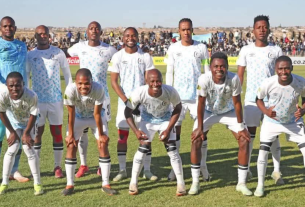
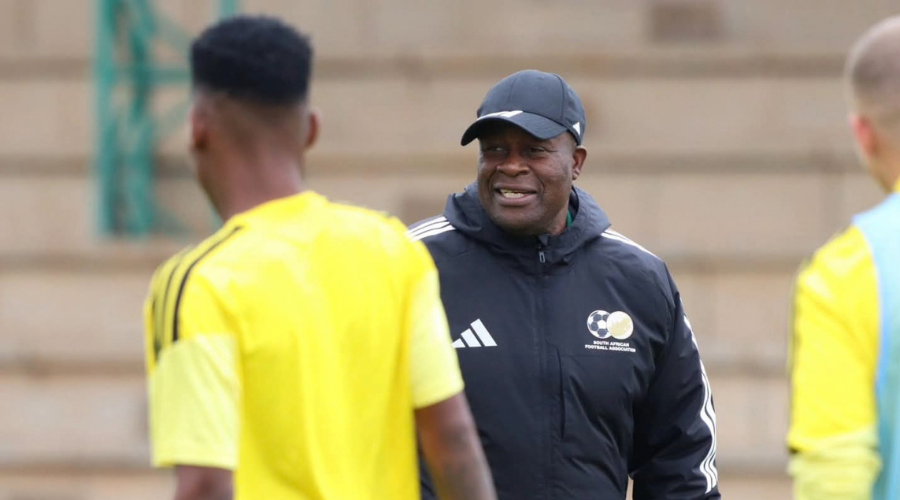
South African football has always produced talented players. From the townships and villages to the biggest football academies in the country, there has never been a shortage of young footballers dreaming of representing Bafana Bafana. But talent needs guidance, and behind every successful generation is a coach who spends countless hours developing players, building their confidence, teaching them the game and preparing them for the demands of international football.
For South Africa’s latest generation of youngsters, one man deserves his flowers: Raymond Mdaka.
While his name may not attract the same headlines as some of the country’s biggest coaches, Mdaka has quietly built an impressive record in South African youth football. Perhaps it is time we stopped being quiet about it.
A Coach Who Understands Youth Development
Mdaka’s journey did not begin with the national team. His coaching career was built through years of grassroots and provincial football, particularly in Limpopo, where he worked with young players and developed his coaching knowledge before progressing to higher levels of the game.
His experience working with provincial youth teams helped establish his reputation as a coach capable of identifying and developing young talent. That experience would later become extremely valuable when he stepped into the national youth setup.
Mdaka understands something that can sometimes be forgotten in football: developing young players is not the same as simply selecting talented players.
It requires patience, structure, discipline and, most importantly, a clear pathway.
From Amajita to African Champions
Mdaka’s biggest breakthrough came with South Africa’s U20 national team, Amajita.
Under his guidance, the team developed from a promising group of youngsters into one of the strongest youth sides on the continent.
In 2024, Amajita won the COSAFA U20 Championship, securing qualification for the following year’s U20 Africa Cup of Nations.
Then came the defining moment.
In 2025, South Africa won the CAF U20 Africa Cup of Nations, defeating Morocco 1–0 in the final.
For South African football, it was a significant achievement. For Mdaka, it was the reward for years of work in youth football.
But he was not finished.
The continental triumph sent Amajita to the FIFA U20 World Cup in Chile, giving a new generation of South African footballers the opportunity to test themselves against some of the best young players from around the world.
Amajita went on to reach the Round of 16.
That experience cannot simply be measured by results. For many of those players, it was an important step towards senior professional football.
The Success Has Continued
What makes Mdaka’s recent work even more impressive is that the success did not end with the 2025 generation.
South Africa continued to perform strongly at U20 level, and in September 2026, Amajita successfully defended their COSAFA U20 Championship title by beating hosts Mozambique 2–1 in the final.
The victory completed another successful regional campaign and strengthened South Africa’s position ahead of the next U20 Africa Cup of Nations.
More importantly, it demonstrated something about Mdaka’s work: he is not simply building one successful team; he is building a programme.
Different players come through the system, but the standards remain.
That is one of the most difficult things to achieve in youth football.
Building a Pathway, Not Just a Team
Perhaps the most encouraging part of Mdaka’s work is the pathway between South Africa’s youth national teams.
Several players from the successful U20 generation have continued into the U23 setup, including Mfundo Vilakazi, Emile Witbooi, Mpho Padime, Luke Baartman, Asekho Tiwani, Neo Rapoo and Kutlwano Letlhaku.
Mdaka’s involvement at U23 level provides another layer of continuity.
The players are not starting from zero every time they move up an age group. They already understand the environment, the expectations and the demands of international football.
That continuity could prove valuable as South Africa looks to develop the next generation of Bafana Bafana players.
The Real Victory Is What Happens After the Trophies
Trophies are important. They give players confidence and provide proof that a team is capable of competing.
But youth football should ultimately be judged by what happens to the players afterwards.
Are they getting opportunities at their clubs? Are they playing senior football? Are they developing tactically and physically? Are they moving closer to the Bafana Bafana setup?
That is where Mdaka’s work becomes particularly important.
The players who have come through his Amajita teams are entering an important phase of their careers. Some have earned opportunities at senior level, while others continue to develop and attract attention through their club performances.
The hope is that this generation can eventually become part of the foundation of Bafana Bafana for years to come.
The Coach Who Doesn’t Need the Spotlight
Football can sometimes make success about personalities. The biggest names receive the biggest headlines, while much of the development work happens away from the cameras.
It happens on training pitches. It happens during tactical sessions. It happens when coaches speak to players after difficult matches. It happens when a young footballer needs someone to believe in him.
That side of coaching does not always make the headlines.
Mdaka’s story is a reminder that football development is a marathon, not a single tournament.
His success has been built over years, and the trophies are now becoming evidence of that work.
South Africa Should Pay Attention
There is a bigger conversation South African football needs to have.
We often talk about producing talent. We talk about academies. We talk about Bafana Bafana’s future. But none of those conversations can be complete without recognising the coaches responsible for developing young footballers.
Raymond Mdaka deserves to be part of that conversation.
His journey from grassroots and provincial football to the national youth setup is a story of persistence. His success with Amajita is a story of development, while the continued progression of his players represents something even bigger: a potential pathway towards the future of South African football.
The 2025 U20 AFCON title will remain an important chapter. The FIFA U20 World Cup experience will remain an important chapter. The latest COSAFA triumph is another chapter.
But perhaps the biggest chapter has not been written yet.
Because the players Mdaka is helping develop today could be the players representing South Africa at senior level tomorrow.
And if that happens, his contribution will be remembered for much more than the trophies he won.
Let’s give Raymond Mdaka his flowers.
Not because his work is finished, but because it deserves to be recognised while he is still doing it.
South African football needs more people committed to building the future.
Raymond Mdaka is doing exactly that.