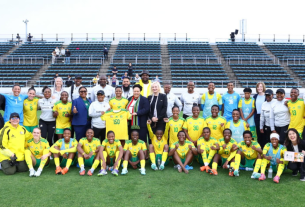
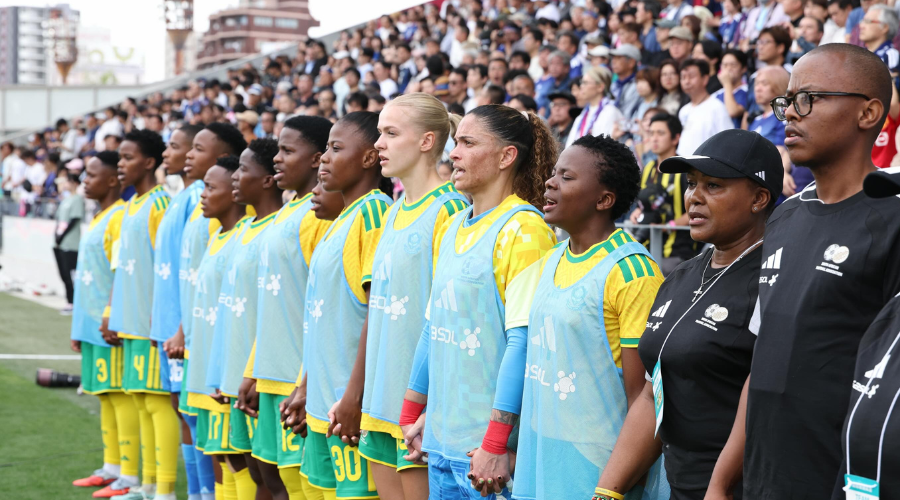
For decades, women’s football in South Africa was driven by passion, resilience and an unwavering commitment to the game, despite limited financial support and commercial opportunities.
Today, that story is changing.
Powered by the inspirational performances of Sasol Banyana Banyana on the continental and global stage, women’s football is evolving beyond the boundaries of sport. It is emerging as a valuable economic asset, a growing commercial opportunity and an increasingly important pillar of South Africa’s sports industry.
As Banyana Banyana look ahead to their 2027 FIFA Women’s World Cup preliminary play-offs against Chinese Taipei, Ecuador and Uzbekistan, the financial and commercial development of the women’s game highlights a crucial reality: investment in women’s football is no longer simply an act of support. It is an investment in South Africa’s sporting and economic future.
1. Commercial Viability and Brand Attraction
For many years, securing major sponsorships for women’s sport was a significant challenge. The commercial landscape, however, is gradually changing.
Long-standing partnerships such as Sasol’s support of Banyana Banyana have demonstrated the powerful brand value associated with investing in women’s football. At domestic level, the Hollywoodbets Super League has also provided greater financial stability and visibility for women’s club football.
Brands are increasingly recognizing that women’s football audiences are passionate, loyal and highly engaged. Sponsorship is therefore moving beyond the traditional corporate social responsibility model.
For forward-thinking companies, women’s football represents an opportunity to connect with audiences through authentic storytelling, national pride and positive social impact.
The more the game grows, the greater the potential return for brands willing to invest early.
2. The Domestic Pipeline as an Economic Engine
A successful national team cannot exist without a strong domestic football structure.
The Hollywoodbets Super League has played an important role in strengthening the pathway for female footballers by creating opportunities both on and off the pitch.
Professional Careers
Greater professionalization allows talented players to dedicate more time to football and pursue the sport as a genuine career.
Employment Opportunities
The growth of women’s football creates employment beyond the playing field. Coaches, physiotherapists, analysts, administrators, referees, photographers, journalists, content creators and other professionals all form part of the expanding football ecosystem.
Developing Transfer Value
Outstanding performances at domestic and international level can also open opportunities for South African players to move abroad.
When local talent earns contracts with clubs in other countries, South African football gains greater international visibility while players benefit from increased earning potential and professional exposure.
This creates a valuable cycle in which grassroots development, professional competition and international opportunities reinforce one another.
3. Broadcasting Rights and Media Value
Visibility is one of the most important drivers of sports economics.
As more women’s football matches reach television audiences and digital platforms, the sport gains opportunities to generate value through broadcasting, advertising, sponsorships and digital content.
The growth of online media has been particularly significant.
Independent football publishers such as Our Soccer Updates can help expand the audience for women’s football by providing match coverage, analysis, player stories and tournament content to fans who increasingly consume sport through their smartphones.
Higher audience engagement creates opportunities for advertising, sponsorships and partnerships, while greater digital visibility makes women’s football more attractive to commercial stakeholders.
The message is becoming increasingly clear: there is an audience for women’s football, and that audience is growing.
4. Social Impact That Creates Economic Value
The influence of women’s football extends far beyond the pitch.
Banyana Banyana have increasingly become associated with initiatives that connect sporting success with broader social issues, including youth empowerment and period poverty.
Initiatives such as sanitary pad donation drives linked to tournament performances demonstrate how football can become a platform for meaningful social change.
For corporate South Africa, this creates an opportunity to combine commercial investment with measurable social impact.
A brand supporting women’s football can simultaneously promote its products, strengthen its public reputation and contribute to causes that matter to communities.
When commercial strategy and social responsibility work together, the impact can be significantly greater.
5. Grassroots Football Holds the Key to Long-Term Growth
The future of South African women’s football will ultimately depend on what happens below the professional level.
Investment is needed in schools, community clubs, academies, coaching programmes and local facilities to ensure that talented girls have a clear pathway from grassroots football to professional competition.
Better pitches, equipment, qualified coaches and structured development programmes can help identify talent earlier and ensure that promising players are not lost because of financial or logistical barriers.
Every successful Banyana Banyana player should inspire the next generation to believe that a career in football is possible.
That requires a system capable of turning inspiration into opportunity.
The Road Ahead: Unlocking the Full Potential
Despite the progress made in recent years, significant challenges remain.
The financial gap between men’s and women’s football is still substantial, particularly when it comes to grassroots investment, facilities, player remuneration, commercial opportunities and performance incentives.
Closing that gap will require a collective effort from corporate South Africa, government, football administrators, broadcasters, clubs, communities and supporters.
The opportunity, however, is enormous.
Every Banyana Banyana victory strengthens the visibility of the women’s game. Every new sponsor expands its commercial reach. Every young girl who joins a football club adds another potential player, coach, referee, administrator or sports professional to the future football economy.
Women’s football should therefore not be viewed simply as a developing sporting product.
It is an economic opportunity, a career pathway, a platform for social change and a source of national pride.
As Banyana Banyana prepare for their next major World Cup qualification challenge, the responsibility now extends beyond the players and technical team.
South Africa must continue building an environment where women’s football can thrive, attract investment and ultimately become a self-sustaining part of the country’s sporting economy.
The next chapter of South African women’s football will not be defined only by trophies.
It will also be defined by the opportunities created along the way.
Stay tuned to Our Soccer Updates for more financial insights, match analysis, player stories and comprehensive coverage of South African women’s football.