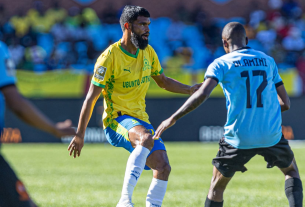
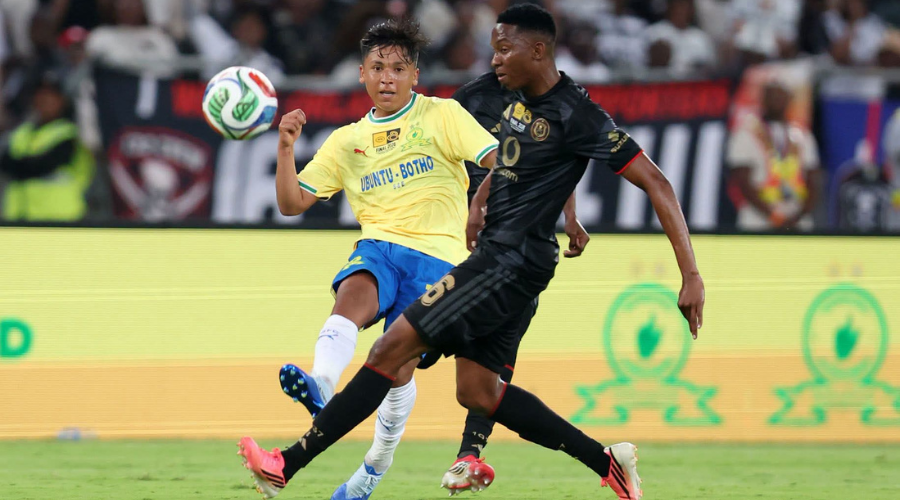
Mamelodi Sundowns defeated Orlando Pirates 2-0 in the 2026 MTN8 Final at Moses Mabhida Stadium in Durban on Saturday, 10 October. Teboho Mokoena’s early goal, Ronwen Williams’ crucial penalty save and Iqraam Rayners’ late penalty highlighted five important lessons for both teams as they turn their attention to the remainder of the season.
The final delivered another significant chapter in the rivalry between two of South African football’s biggest clubs. Mokoena opened the scoring in the 11th minute, giving Sundowns an early advantage before Pirates missed an opportunity to equalise when Williams saved Gamphani Lungu’s penalty. Rayners subsequently converted a late penalty to confirm Sundowns’ victory, ending Pirates’ pursuit of a fifth consecutive MTN8 title and giving the Brazilians their first triumph in the competition since 2021.
Beyond the trophy, the match offered important lessons about taking chances, maintaining defensive concentration, responding to pressure and working collectively. Here are five key lessons both teams can take from the final.
Taking Chances Can Decide Major Finals
The first lesson from the final is the importance of converting opportunities when they arrive. Sundowns demonstrated their ability to capitalise on a decisive moment when Mokoena scored in the 11th minute. The early goal gave the Brazilians an advantage and changed the demands placed on Pirates, who suddenly had to find a way back into the contest.
Pirates subsequently had a major opportunity to equalise when Lungu stepped up for a second-half penalty. However, Williams saved the effort, leaving Sundowns in front. That difference proved important, as Sundowns capitalised on their scoring opportunity while Pirates could not convert theirs.
The lesson for both teams is straightforward: reaching dangerous positions is only part of the job. Players must also make the most of the chances created, particularly in high-pressure matches where opportunities can be limited. For Pirates, improving their efficiency in front of goal will be an important consideration, while Sundowns will want to maintain their ability to deliver when the pressure is highest.
Defensive Concentration Matters From the First Minute
Sundowns’ opening goal highlighted how quickly a cup final can change. Mokoena found the net after a backheel pass from Thabang Matuludi inside the penalty area, exposing a moment that Pirates will want to examine when reviewing their defensive performance. The early breakthrough left the Buccaneers chasing an equaliser for much of the contest.
Defending effectively requires more than simply having players behind the ball. Teams must track runners, communicate clearly and react quickly when opponents find space in dangerous areas. A brief lapse in concentration can be enough to create a scoring opportunity, particularly against opponents with the attacking quality of Sundowns.
The Brazilians also have lessons to take from the match. Protecting a lead requires the same discipline throughout the contest, especially when opponents increase their attacking pressure. Their ability to preserve the advantage after scoring was an important part of the victory. For both clubs, the message is clear: defensive concentration must be maintained from the opening whistle until the final whistle.
Goalkeepers Can Change the Outcome of a Final
Ronwen Williams was one of the most influential players in the final, particularly when he saved Lungu’s second-half penalty. The intervention prevented Pirates from drawing level and allowed Sundowns to retain their advantage at a crucial stage of the match.
Goalkeepers are often judged by the goals they concede, but performances in major matches can also be defined by the opportunities they prevent. Williams demonstrated the importance of composure, preparation and execution under pressure. His contribution was especially significant because Pirates remained within reach of an equaliser at the time.
Had the penalty gone in, the match could have developed differently. Sundowns would have needed to respond to a level scoreline, while Pirates might have gained confidence from getting back into the contest. Although the outcome of such a scenario cannot be predicted with certainty, Williams’ save preserved a crucial advantage for the Brazilians. For Sundowns, the final reinforced the value of having a goalkeeper capable of making decisive interventions. For Pirates, the lesson is that creating scoring opportunities must be matched by effective execution.
Teams Need a Plan for When Things Go Wrong
Football matches rarely unfold exactly as coaches expect. A team may concede earlier than planned, miss a significant scoring opportunity or struggle to impose its preferred style of play. How it responds to those setbacks can determine whether it recovers or allows the situation to worsen.
Pirates faced this challenge after Mokoena’s early goal. They needed to find an equaliser without leaving themselves too exposed to Sundowns’ attacking threat. The missed penalty created another setback, forcing the Buccaneers to continue searching for a breakthrough after Williams had denied them from the spot.
These moments highlighted the importance of having alternative approaches when the original game plan is disrupted. Coaches must be prepared to adjust their tactics, while players need to remain composed and execute their responsibilities. Sundowns also faced pressure when Pirates were awarded the penalty. Williams’ save helped them negotiate that difficult moment, but the team still had to remain organised until Rayners secured the result. The broader lesson is that resilience involves more than continuing to work hard; it also requires making effective decisions when circumstances become difficult.
Winning a Final Requires Collective Responsibility
The final demonstrated why cup victories should not be attributed to one individual alone. Mokoena supplied the opening goal, Williams made a crucial penalty save and Rayners converted the late spot-kick. Each contribution was important, but Sundowns also needed their defenders, midfielders and other attacking players to protect their advantage and manage the contest.
Their victory reflected a collective effort to remain organised, respond to pressure and take opportunities when they arose. For Pirates, the same principle applies to the defeat. Although the missed penalty will attract attention, the result cannot fairly be placed on Lungu alone. Sundowns’ early goal, Pirates’ inability to equalise and the Brazilians’ defensive performance all formed part of the wider picture.
Football is a team sport, and both success and disappointment must be assessed in that context. Rather than focusing exclusively on one mistake, teams can review their overall performances and identify practical areas for development. This approach provides a more useful foundation for improvement as the season progresses.
What the Result Means for Mamelodi Sundowns
Winning the MTN8 is an important achievement for Sundowns, who had not lifted the trophy since 2021. The victory against Pirates provides an opportunity for the squad to build confidence as it continues competing in domestic and continental football. The final highlighted the value of taking opportunities, remaining composed under pressure and protecting an advantage.
However, the challenge now is to maintain those standards in upcoming fixtures. A cup triumph can provide momentum, but sustained success requires consistent performances throughout the season. Miguel Cardoso and his technical team will want the players to carry the positive aspects of the final into their next matches while continuing to improve.
What Orlando Pirates Must Take Forward
For Orlando Pirates, losing the final was a disappointment, especially given their pursuit of a fifth consecutive MTN8 title. Nevertheless, the result provides an opportunity to identify areas for improvement as they prepare for the remainder of the campaign.
The Buccaneers will need to examine the circumstances surrounding Sundowns’ opening goal, their use of scoring opportunities and their response to the missed penalty. They must also ensure that disappointment does not affect their performances in the competitions that remain. Reaching a final demonstrates competitiveness, but winning requires effective execution at decisive moments.
Pirates have an opportunity to learn from the experience and strengthen their approach to future high-pressure matches. Their response on the pitch will ultimately be more important than the immediate disappointment of losing the trophy.
Final Verdict: Lessons for Two South African Football Giants
Mamelodi Sundowns’ 2-0 victory over Orlando Pirates offered five important lessons: taking chances matters, defensive concentration is essential, goalkeepers can change matches, teams need solutions when plans are disrupted, and collective responsibility remains central to success.
Sundowns applied these principles effectively during the decisive moments of the final, while Pirates were unable to convert their opportunity to equalise. Nevertheless, both clubs can use the experience as they prepare for the remainder of the season. Sundowns will aim to build on their MTN8 triumph, while Pirates will look to learn from the defeat and improve their execution in important matches.
The final produced one winner, but its lessons extend to both teams. In football, trophies are often decided by small margins, and the ability to respond to crucial moments can shape an entire season.
Image by Mamelodi Sundowns (Facebook)